Eternal Soul Indian Adventure is a 2024 Indian role-playing game (RPG) developed and published by Daman Games, a Bangalore-based gaming studio renowned for its focus on culturally authentic gaming experiences tailored for global and desi audiences. Blending open-world exploration, deep storytelling rooted in Hindu mythology and regional Indian folklore, and gameplay mechanics designed to resonate with Indian sensibilities, the game has emerged as a landmark in the Indian gaming industry—shattering long-standing stereotypes that Indian games lack production value, narrative depth, or global appeal.
Set across a sprawling, visually breathtaking representation of India—spanning from the snow-capped peaks of the Himalayas in the north to the sun-drenched beaches of Kanyakumari in the south, from the golden deserts of Rajasthan in the west to the lush rainforests of Assam in the east—Eternal Soul Indian Adventure invites players to step into the shoes of a "Soulkeeper," a chosen mortal tasked with restoring harmony between Mortal Lok (the realm of humans) and Spirit Lok (the realm of gods, demons, and ancestral spirits). What truly sets the game apart is its unwavering commitment to cultural authenticity: every character, location, costume, weapon, and quest draws inspiration from real Indian traditions, ensuring that players don’t just play a game—they embark on a journey of discovery through their own heritage, whether they hail from Tamil Nadu, Punjab, Bengal, or beyond.
Launched simultaneously across mobile (Android and iOS), PC (Steam, Epic Games Store), and console (PlayStation 5, Xbox Series X/S) platforms on 15 March 2024, Eternal Soul Indian Adventure has garnered widespread acclaim for its attention to detail, engaging gameplay loops, and ability to bridge the gap between casual and hardcore gaming audiences. Within its first month of release, the game crossed 7 million downloads globally—with 4.2 million downloads from India alone—and secured a 4.9-star rating on major app stores (Google Play Store, Apple App Store) and PC gaming platforms. This success has proven beyond doubt that there exists a massive, underserved audience for games that celebrate Indian culture—both within India and among the 40 million-strong global Indian diaspora.
What makes Eternal Soul Indian Adventure stand out from other mythological games is its refusal to reduce Indian culture to a mere aesthetic. Instead, the game weaves cultural elements into its core mechanics: from ayurvedic healing systems inspired by Kerala’s traditional medicine to mantra-based magic rooted in Vedic scriptures, from Punjabi bhangra-inspired combat animations to Bengali Durga Puja-themed quests. The development team spent over four years researching and traveling across 32 Indian states and union territories, collaborating with historians, anthropologists, local artisans, and folklore experts to ensure that every aspect of the game feels authentic and respectful.
Whether you’re a die-hard RPG fan seeking deep character customization and strategic combat, a mythology enthusiast eager to explore India’s rich storytelling traditions, or simply a player looking for a game that feels "close to home," Eternal Soul Indian Adventure offers an experience that is both entertaining and enlightening. It’s not just a game—it’s a love letter to India, crafted by Indians for the world.
Development 🛠️
The Vision Behind Eternal Soul Indian Adventure
The idea for Eternal Soul Indian Adventure was born in late 2019, when a group of passionate Indian gamers and developers at Daman Games grew frustrated with the lack of representation of Indian culture in the global gaming market. "We were tired of playing games set in Western fantasy worlds or generic post-apocalyptic landscapes that had nothing to do with our daily lives, our festivals, or our stories," recalls Rajeshwari "Raj" Menon, the game’s creative director and co-founder of Daman Games. "Every time we picked up a popular RPG, we saw elements of Greek, Norse, or Japanese mythology—but where were our epics? Where were the Mahabharata, the Ramayana, the Panchatantra? We wanted to create a game that felt like it was made for us—something that celebrated our mythology, our languages, our festivals, and our way of life, without compromising on gameplay quality."
The initial concept was met with skepticism from investors and industry peers, who argued that "Indian culture doesn’t sell globally" and that "desi games are only for niche audiences." Undeterred, the Daman Games team decided to self-fund the project for the first two years, using their savings and revenue from smaller mobile games to finance research and development. "We knew that if we wanted to do this right, we couldn’t cut corners on research," says Arjun Verma, the game’s lead developer. "We didn’t want to create a game that just put a turban on a character or a temple in the background—we wanted Indian culture to be the heart and soul of the game."
The development team’s research phase was exhaustive. Between 2020 and 2022, they traveled across 32 Indian states and union territories, spending weeks in each region to immerse themselves in local cultures. In Tamil Nadu, they studied the architecture of the Brihadeeswarar Temple in Thanjavur to model in-game temples; in Rajasthan, they worked with master weavers in Jaipur to replicate Bandhani and Leheriya textiles for character costumes; in Kerala, they trained with ayurvedic practitioners in Alleppey to design the game’s healing mechanics; in Punjab, they observed rural farming practices in Amritsar to create realistic survival gameplay; in West Bengal, they participated in Durga Puja preparations to understand the festival’s rituals and significance; and in the Northeast, they collaborated with Khasi and Mizo elders to document folk tales that would inspire side quests.
One of the biggest challenges the team faced was balancing cultural accuracy with fun, engaging gameplay. "We didn’t want to make a textbook with buttons—we wanted to make a game that people would want to play for hours on end," explains Priya Sharma, the game’s narrative director. "So we took creative liberties where necessary, but we always stayed true to the core of the traditions we were representing. For example, our magic system is based on Vedic mantras, but we made sure that each mantra’s meaning aligns with its in-game effect. The ‘Om Namah Shivaya’ mantra, which is a prayer to Lord Shiva, unleashes a fire attack—paying homage to Shiva’s role as the destroyer of evil. Similarly, the ‘Om Shri Lakshmiyai Namah’ mantra, a prayer to Goddess Lakshmi, heals the player—reflecting Lakshmi’s association with prosperity and well-being."
Another key challenge was ensuring that the game represented India’s linguistic diversity. The team decided to include support for 12 major Indian languages—Hindi, Tamil, Telugu, Bengali, Punjabi, Marathi, Gujarati, Malayalam, Kannada, Odia, Assamese, and Urdu—along with Indian English. "Language is a big part of our identity," says Raj Menon. "A player from Tamil Nadu should be able to experience the game in their mother tongue, just like a player from Uttar Pradesh or Karnataka. We worked with native speakers and linguists to ensure that the translations were accurate and natural, not just literal."
Art & Music: Celebrating Indian Craftsmanship
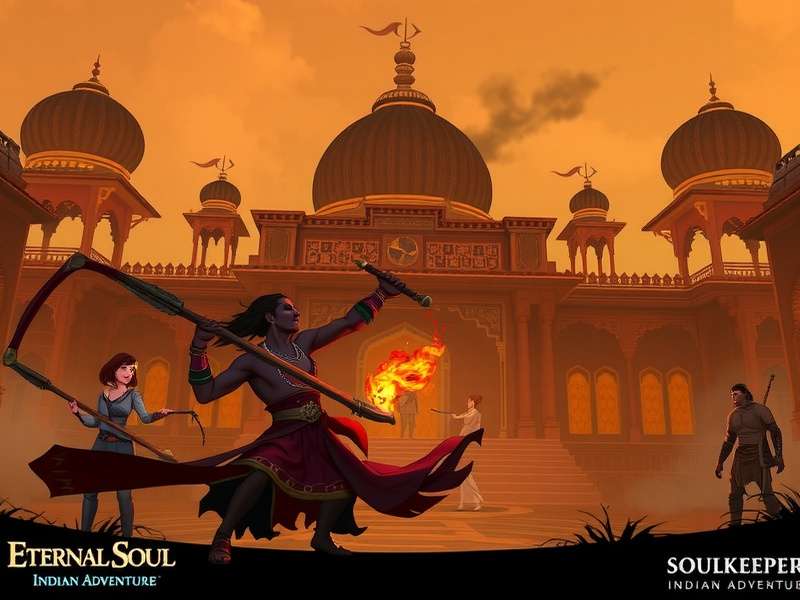
Concept art from Eternal Soul Indian Adventure, showcasing the game’s blend of regional Indian architectural styles—including Tamil Nadu’s Dravidian temple gopurams and Rajasthan’s Rajput haveli balconies.
The game’s art style is a love letter to Indian craftsmanship, blending traditional and modern elements to create a visually striking world that feels both familiar and fantastical. The team collaborated with over 70 local artisans from across India to create in-game assets, ensuring that every texture, pattern, and design has a cultural root.
Wood carvers from Gujarat’s Saurashtra region designed the intricate jali (lattice) patterns on haveli walls and temple interiors; potters from West Bengal’s Bankura district created the terracotta decorations seen in village homes and sacred sites; metalworkers from Uttarakhand’s Almora district crafted the designs for weapons and armor, drawing inspiration from Chola-era bronze sculptures and Mughal-era swords; and textile artists from Varanasi and Kanchipuram provided patterns for character costumes, including Banarasi silk sarees, Kanjeevaram silk dhotis, and Phulkari dupattas.
The color palette of the game draws inspiration from India’s natural landscapes and cultural symbols, creating a distinct visual identity for each region:
- North India (Himalayas, Delhi, Uttar Pradesh): Cool blues, whites, and silvers (snow-capped peaks, marble temples like the Taj Mahal) contrasted with deep reds and golds (sindoor, rangoli, temple domes).
- West India (Rajasthan, Gujarat): Warm oranges, yellows, and browns (desert sands, terracotta forts) accented with vibrant blues (Jodhpur’s "Blue City") and greens (Gujarat’s stepwells).
- South India (Tamil Nadu, Kerala, Karnataka): Rich greens (backwaters, rainforests), deep reds (temple gopurams), and golds (kanchipuram silk, temple jewelry).
- East India (West Bengal, Odisha, Assam): Earthy browns (terracotta temples), bright yellows (Durga Puja decorations), and lush greens (Sunderbans mangroves, Assam tea gardens).
- Northeast India (Meghalaya, Mizoram, Manipur): Vibrant greens (hills, forests), blues (waterfalls, lakes), and pops of red and yellow (traditional tribal textiles).
Every location in the game is handcrafted to reflect its real-world inspiration. For example, the in-game representation of Varanasi features the iconic Ganges ghats, with pilgrims performing aarti (prayer rituals) at dawn, while the Jaipur-inspired city includes Hawa Mahal-like balconies and a bustling bazaar selling spices, textiles, and jewelry. The team used a combination of photogrammetry and hand-drawing to recreate these locations, ensuring that they are both accurate and visually appealing.
The game’s music, composed by the renowned Indian musician A.R. Rahman (in a landmark collaboration with Daman Games), is equally authentic and immersive. Rahman drew inspiration from India’s diverse musical traditions, creating region-specific soundtracks that change as the player travels across the country. In South India, the music leans into Carnatic classical styles, featuring instruments like the veena, mridangam, and nadaswaram; in North India, it incorporates Hindustani classical and folk melodies, with the sitar, tabla, and shehnai taking center stage; in rural areas, it uses simple folk tunes played on traditional instruments like the dholak, flute, and harmonium; and in spiritual locations like temples and ashrams, it features devotional music (bhajans, kirtans) performed by local singers.
The game’s theme song, "Atma Ki Khoj" (The Search for the Soul), has become a viral hit among gamers and music lovers alike. Sung by Shreya Ghoshal and Arijit Singh, the song blends classical Indian vocals with modern electronic beats, capturing the game’s blend of tradition and innovation. "Working on Eternal Soul Indian Adventure was a deeply personal experience," says A.R. Rahman. "I wanted the music to evoke the soul of India—to make players feel like they’re traveling through their own country, experiencing its sounds and rhythms firsthand."
Technical Development & Accessibility
Eternal Soul Indian Adventure was developed using the Unity Engine, chosen for its flexibility and ability to optimize the game for a wide range of devices—from low-end Android smartphones (with 2GB RAM) to high-end gaming PCs and consoles. The team prioritized accessibility, ensuring that the game can be played by people of all ages and abilities, regardless of their gaming experience or technical setup.
Key accessibility features include:
- Adjustable Difficulty Levels: Four difficulty settings (Casual, Normal, Hard, Legendary) to cater to different skill levels. Casual mode reduces enemy damage and increases healing, making it ideal for casual players and children; Legendary mode increases enemy health and damage, providing a challenge for hardcore gamers.
- Text-to-Speech: All in-game text (dialogue, quest descriptions, menus) can be read aloud in any of the 13 supported languages, helping players with visual impairments or reading difficulties.
- Customizable Controls: Players can remap buttons and adjust sensitivity for touch, controller, and keyboard/mouse inputs. For mobile players, the touch interface can be resized and repositioned to suit their preferences.
- Color Blind Mode: A special color filter that adjusts the game’s color palette to make it easier for players with color blindness to distinguish between elements (e.g., enemy health bars, interactive objects).
- Low Data Mode: For mobile players with limited data plans, this mode reduces the size of game updates and disables non-essential visual effects to minimize data usage.
The game’s open world is seamless, with no loading screens between regions—a technical feat that required significant optimization. The team used procedural generation to create large-scale landscapes (like deserts, forests, and mountain ranges) but handcrafted key locations (temples, forts, villages, cities) to ensure cultural accuracy. "Procedural generation helped us create a vast world without compromising on quality," explains Arjun Verma. "But when it comes to places like the Taj Mahal or the Brihadeeswarar Temple, you can’t rely on algorithms—you have to handcraft every detail to do justice to their cultural significance."
Another key technical feature is the game’s dynamic weather and day-night cycle, which reflects India’s diverse climates. In Kerala, players will experience monsoon rains that make traversal more challenging but boost the growth of healing herbs; in Rajasthan, heatwaves will drain the player’s stamina faster, forcing them to seek shade and water; in the Himalayas, snowfall will reduce visibility but unlock special winter-themed quests; and in the Northeast, fog will add an element of mystery to exploration. The day-night cycle also affects gameplay: some quests (like night-time aarti rituals or stealth missions) can only be completed at specific times of day, and NPCs have different routines depending on whether it’s morning, afternoon, evening, or night.
The game’s AI system is designed to make non-playable characters (NPCs) feel realistic and responsive. Each NPC has a unique daily routine—farming in the morning, praying at temples in the afternoon, selling goods in the bazaar in the evening, and resting at night—and their behavior changes based on the player’s actions and reputation. For example, if the player helps a village solve a water crisis, the villagers will greet them warmly, offer discounts on goods, and share valuable information; if the player steals from a merchant or ignores a village’s plea for help, their reputation will suffer, and NPCs may refuse to interact with them or even attack them.
To ensure smooth performance across devices, the team implemented a range of optimization techniques, including level-of-detail (LOD) rendering (which reduces the detail of distant objects), texture compression, and dynamic resolution scaling (which adjusts the game’s resolution based on the device’s performance). "We wanted every player to have a great experience, whether they’re playing on a budget smartphone or a high-end console," says Arjun Verma. "That meant making tough choices—like reducing the number of NPCs in crowded areas on low-end devices—but it was worth it to make the game accessible to as many people as possible."
Funding & Release Strategy
After two years of self-funding, Daman Games secured $5 million in Series A funding in 2022 from a group of investors, including prominent Indian venture capital firms and angel investors from the gaming industry. The funding was used to expand the development team (from 15 to 40 members), upgrade technical infrastructure, and conduct beta testing across India.
The beta testing phase, which ran from October 2023 to February 2024, involved over 100,000 players from across India. The team collected feedback on gameplay, story, art, and accessibility, making over 200 changes based on player input. "Beta testing was crucial for us," says Raj Menon. "We wanted to make sure that the game resonated with Indian players—so we asked them to tell us what worked, what didn’t, and what they wanted to see more of. For example, many players from the Northeast told us that they wanted more representation of their cultures, so we added three new side quests set in Meghalaya, Mizoram, and Manipur. Other players asked for more customization options for female characters, so we expanded the costume and hairstyle choices."
The game’s release strategy was designed to maximize its reach and impact. Daman Games partnered with major app stores (Google Play Store, Apple App Store), PC gaming platforms (Steam, Epic Games Store), and console manufacturers (Sony, Microsoft) to ensure that the game was available on all major platforms. They also launched a large-scale marketing campaign in India and among the global Indian diaspora, focusing on social media (Facebook, Instagram, YouTube, TikTok), gaming influencers, and cultural events.
Key elements of the marketing campaign included:
- Influencer Collaborations: Partnering with top Indian gaming influencers (like CarryMinati, Mortal, and Techno Gamerz) to stream gameplay and share their experiences with their followers.
- Cultural Events: Showcasing the game at major Indian cultural events, including Durga Puja in Kolkata, Diwali in Delhi, and Pongal in Chennai.
- Social Media Challenges: Launching hashtag challenges like #EternalSoulIndia and #MyDesiAdventure, encouraging players to share their in-game screenshots, videos, and stories.
- Educational Content: Creating short videos and blog posts about the cultural references in the game, helping players learn more about Indian mythology and traditions.
The game was released on 15 March 2024—coinciding with Holi, the Indian festival of colors—a choice that was intentional. "Holi is a festival of unity, joy, and celebration—values that we wanted to associate with our game," says Raj Menon. "It’s a time when people from all backgrounds come together, and we wanted Eternal Soul Indian Adventure to bring people together too, through their love for Indian culture and gaming."
Gameplay 🎯
Core Mechanics: The Soulkeeper’s Journey
At its core, Eternal Soul Indian Adventure is an open-world RPG that combines exploration, combat, storytelling, and survival elements to create a immersive experience. Players take on the role of a Soulkeeper—a mortal chosen by the gods to protect the boundary between Mortal Lok and Spirit Lok, which has been weakened by the rise of the Shadow Lord, a former Soulkeeper who has turned to darkness.
The game begins with character customization, where players can tailor their Soulkeeper to their preferences:
- Name: Players can choose any name, with the option to use Devanagari, Tamil, Bengali, or other Indian scripts.
- Gender: Male, Female, or Non-Binary.
-
Region of Origin: Players can choose from 12 regions (Uttar Pradesh, Tamil Nadu, Punjab, Kerala, Rajasthan, West Bengal, Gujarat, Maharashtra, Assam, Meghalaya, Odisha, Karnataka). The region of origin affects the character’s starting skills, appearance, and backstory. For example:
- A character from Punjab starts with farming, survival, and melee combat skills, and wears a traditional kurta-pajama with a turban.
- A character from Kerala starts with ayurvedic healing and archery skills, and wears a mundu and blouse or a kasavu saree.
- A character from Rajasthan starts with horse riding, swordplay, and stealth skills, and wears a colorful lehenga-choli or dhoti-kurta with a pagri.
- Appearance: Players can customize their character’s skin tone, hairstyle, facial features, and accessories (e.g., bangles, bindis, turbans, necklaces).
- Starting Weapon: Players can choose their initial weapon, based on their region of origin (e.g., talwar for Rajasthan, bow and arrow for Kerala, khukuri for Assam).
The game’s main objective is to stop the Shadow Lord from merging Mortal Lok and Spirit Lok—a cataclysmic event that would destroy both realms. To do this, players must travel across India, gather allies, master powerful skills, and collect Soul Fragments—ancient artifacts that hold the power to restore the boundary between the realms. Along the way, they will face a variety of challenges, including powerful demons, corrupt nobles, and natural disasters, and make choices that will shape the fate of the world and their own reputation.
Exploration is a key part of the gameplay. The game’s open world covers over 600 square kilometers of virtual India, divided into five major regions (North, West, South, East, Northeast), each with its own unique landscapes, climates, and cultures. Players can travel by foot, horse, elephant, boat, or magical mounts (like the Garuda, a mythical bird, or the Naga, a serpent-like creature) that are unlocked as they progress through the game. Along the way, they will discover hidden locations like ancient temples, cave systems, abandoned forts, and sacred groves, each with its own secrets, side quests, and collectibles.
One of the most unique aspects of exploration is the game’s Cultural Discovery System. As players explore, they will encounter cultural landmarks (like the Taj Mahal, Brihadeeswarar Temple, or Sun Temple of Konark), traditional festivals (like Holi, Diwali, Pongal, or Durga Puja), and local customs (like langar in Punjab, boat races in Kerala, or tribal dances in the Northeast). Interacting with these elements unlocks entries in the game’s Cultural Encyclopedia, which provides detailed information about their history, significance, and real-world context. For example, visiting the Golden Temple in Amritsar unlocks an entry about Sikhism, the history of the Golden Temple, and the importance of langar (community meals) in Sikh culture. Collecting all entries in the Cultural Encyclopedia unlocks a special achievement and a unique in-game item (the "Amulet of Cultural Wisdom," which boosts the player’s magic power).
Combat: Divine Powers & Mortal Skills
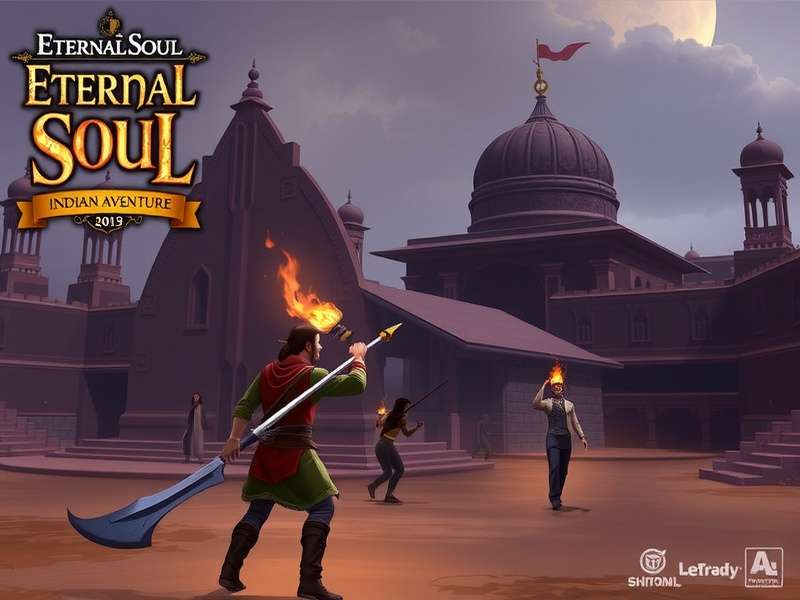
A combat scene from Eternal Soul Indian Adventure, showcasing the game’s blend of melee combat and mantra-based magic. The Soulkeeper is using the "Om Namah Shivaya" mantra to unleash a fire attack on a group of demons.
Combat in Eternal Soul Indian Adventure is a dynamic mix of melee, ranged, and magic attacks, with a focus on strategy and skill. The game uses a real-time combat system with a dodge/parry mechanic, allowing players to fluidly switch between different attack styles based on the situation.
Melee Combat: Players can use a variety of traditional Indian weapons, each with its own strengths, weaknesses, and attack animations. Common melee weapons include:
- Talwar: A curved sword from North India, ideal for fast, slashing attacks. Effective against unarmored enemies.
- Khukuri: A short, curved knife from Nepal and Northeast India, perfect for close-quarters combat and stealth kills. Deals high damage but has a short range.
- Spear: A long-range melee weapon used across India, effective against mounted enemies and groups of foes. Can be thrown for ranged attacks.
- Axe: A heavy weapon from Punjab and Rajasthan, deals high damage but is slow. Effective against armored enemies and breaking barriers.
- Katar: A push dagger from Gujarat, used for stabbing attacks. Ideal for stealth combat and counterattacks.
Ranged Combat: Ranged weapons allow players to attack enemies from a distance, ideal for taking down powerful foes or weakening groups of enemies before engaging in melee combat. Common ranged weapons include:
- Bow and Arrow: A traditional weapon used across India, with different types of arrows (fire arrows, poison arrows, healing arrows) that can be crafted using resources.
- Slingshot: A simple but effective weapon, ideal for hunting small animals and stunning enemies. Can be upgraded to fire stones, pellets, or explosive projectiles.
- Lasso: A weapon from Rajasthan, used to disarm enemies or pull them closer. Can also be used to climb walls and cross gaps.
Magic System: The game’s magic system is based on Vedic mantras and Hindu mythology, adding a unique cultural flavor to combat. Players can unlock three types of magic, each associated with a different group of deities:
-
Deva Magic (Divine Powers): Associated with the Trimurti (Brahma, Vishnu, Shiva) and other major gods. Includes offensive, defensive, and healing spells. Examples:
- "Om Namah Shivaya" (Prayer to Shiva): Unleashes a powerful fire attack that damages multiple enemies.
- "Om Namo Narayanaya" (Prayer to Vishnu): Creates a protective shield that blocks incoming damage.
- "Om Shri Lakshmiyai Namah" (Prayer to Lakshmi): Heals the player and nearby allies.
- "Om Brahmaay Namah" (Prayer to Brahma): Creates a clone of the player to distract enemies.
-
Rishi Magic (Spiritual Abilities): Associated with ancient sages (rishis) and goddesses of knowledge (Saraswati) and nature (Parvati). Focuses on illusions, mind control, and nature-based attacks. Examples:
- "Om Saraswatyai Namah" (Prayer to Saraswati): Confuses enemies, making them attack each other.
- "Om Parvatiyai Namah" (Prayer to Parvati): Summons vines to trap enemies and heal the player.
- "Om Vayuve Namah" (Prayer to Vayu, the Wind God): Creates a tornado that damages and knocks back enemies.
-
Warrior Magic (Kshatriya Powers): Associated with warrior gods like Kartikeya, Hanuman, and Bhima. Focuses on enhancing the player’s physical abilities. Examples:
- "Om Kartikeyai Namah" (Prayer to Kartikeya): Increases the player’s attack speed and damage.
- "Om Hanumate Namah" (Prayer to Hanuman): Boosts the player’s strength and jumping ability.
- "Om Bhimaya Namah" (Prayer to Bhima): Makes the player immune to damage for a short time.
To use magic, players must recite mantras—either by typing them out (on PC/console) or drawing them on the screen (on mobile). The accuracy of the recitation affects the power of the spell: a perfectly recited mantra will unleash a maximum-damage attack or a full-heal, while a poorly recited one will have reduced effect (e.g., dealing half damage or healing only a small portion of health). This adds a unique layer of immersion, as players learn and memorize real mantras while playing the game. "We wanted magic to feel meaningful, not just like pressing a button," says Priya Sharma. "By requiring players to recite mantras, we’re encouraging them to engage with the cultural and spiritual aspects of the game, while also making magic feel more powerful and satisfying to use."
Combat also includes stealth elements, which are useful for avoiding tough enemies, completing quests without being detected, or taking down enemies silently. Players can hide in bushes, behind walls, and in tall grass; climb walls and trees to get the high ground; and use distractions (like throwing stones or making animal calls) to lure enemies away. Stealth is especially important in quests set in forts, temples, and cities, where loud combat would alert guards and make the mission more difficult. Successfully completing a stealth mission rewards the player with extra experience points and rare loot.
Boss battles are a highlight of the game’s combat system, featuring large, powerful enemies inspired by Indian mythology—including demons (asuras), mythical creatures (like the Rakshasa, Kumbhakarna, and Nagas), and corrupted gods. Each boss has unique attack patterns and weaknesses, requiring players to use a combination of melee, ranged, and magic attacks to defeat them. For example, the boss battle against the Rakshasa King requires players to use fire magic to weaken his armor, then switch to melee attacks to deal damage, while avoiding his powerful club swings and fire breath. Boss battles are epic in scale, with dynamic environments (e.g., a temple collapsing around the player, a storm raging during the fight) that add to the intensity.
Skill Trees: Customizing Your Soulkeeper
Eternal Soul Indian Adventure features a deep, flexible skill tree system that allows players to customize their Soulkeeper’s abilities based on their playstyle. The skill tree is divided into three main paths—Deva, Rishi, and Kshatriya—each with 15 tiers of skills. Players earn skill points by leveling up (gained through completing quests, defeating enemies, and discovering cultural landmarks) and can allocate them to any path, allowing for hybrid builds.
Deva Path (Divine Magic Focus): This path focuses on divine magic, healing, and defense. Ideal for players who prefer to support their allies or play defensively. Key skills include:
- Shiva’s Wrath (Tier 3): Enhances the "Om Namah Shivaya" mantra, increasing its damage and adding a burn effect that damages enemies over time.
- Vishnu’s Blessing (Tier 5): Enhances the "Om Namo Narayanaya" mantra, making the shield reflect damage back to attackers.
- Lakshmi’s Grace (Tier 8): Enhances the "Om Shri Lakshmiyai Namah" mantra, allowing it to heal allies over time and remove status effects (poison, burn).
- Trimurti’s Fury (Tier 15): Ultimate skill. Summons the Trimurti (Brahma, Vishnu, Shiva) to attack enemies, dealing massive damage and healing the player to full health.
Rishi Path (Spiritual Magic Focus): This path focuses on spiritual magic, illusions, and nature-based attacks. Ideal for players who prefer to attack from a distance or use strategy to outsmart enemies. Key skills include:
- Saraswati’s Illusion (Tier 3): Enhances the "Om Saraswatyai Namah" mantra, creating multiple clones of the player instead of one.
- Parvati’s Vines (Tier 5): Enhances the "Om Parvatiyai Namah" mantra, making the vines deal poison damage to trapped enemies.
- Vayu’s Tempest (Tier 8): Enhances the "Om Vayuve Namah" mantra, creating a larger tornado that pulls enemies in and deals continuous damage.
- Rishi’s Enlightenment (Tier 15): Ultimate skill. Grants the player invincibility for 10 seconds and increases all magic damage by 200%.
Kshatriya Path (Warrior Focus): This path focuses on melee combat, ranged attacks, and physical enhancements. Ideal for players who prefer to charge into battle and take down enemies head-on. Key skills include:
- Kartikeya’s Strike (Tier 3): Increases melee weapon damage by 20% and chance to land a critical hit by 15%.
- Hanuman’s Leap (Tier 5): Allows the player to jump higher and farther, and deal damage when landing on enemies.
- Bhima’s Fortitude (Tier 8): Increases the player’s health by 30% and reduces damage taken by 25%.
- Kshatriya’s Rage (Tier 15): Ultimate skill. The player enters a rage state, increasing attack speed and damage by 150% for 15 seconds. During this time, the player cannot be stunned or knocked back.
Players can also unlock cross-path skills, which combine elements of two or more paths to create unique abilities. For example:
- Shiva’s Speed (Deva + Kshatriya): Combines Shiva’s fire magic with Hanuman’s speed, allowing the player to move quickly while leaving a trail of fire that damages enemies.
- Saraswati’s Strike (Rishi + Kshatriya): Combines Saraswati’s illusions with Kartikeya’s strike, allowing the player’s clones to deal melee damage to enemies.
- Parvati’s Shield (Rishi + Deva): Combines Parvati’s vines with Vishnu’s shield, creating a shield made of vines that heals the player while blocking damage.
The skill tree system is designed to be flexible, allowing players to respec their skills at any time (for a small in-game currency cost) if they want to try a different playstyle. This encourages experimentation and ensures that players can adapt their build to different challenges, whether they’re facing a powerful boss, completing a stealth quest, or exploring a dangerous desert.
Quests: Stories Rooted in Indian Culture
Quests are a central part of Eternal Soul Indian Adventure’s gameplay, with over 300 main story quests and 800 side quests to complete. Each quest is designed to tell a story rooted in Indian culture, whether it’s a main story quest about stopping the Shadow Lord or a side quest about helping a village prepare for a festival. The game’s quest design emphasizes player choice, with many quests offering multiple solutions and endings that affect the game’s world and the player’s reputation.
Main Story Quests: The main story is divided into five acts, each set in a different region of India. The story follows the Soulkeeper’s journey to collect the 12 Soul Fragments, which are scattered across the country, and confront the Shadow Lord. Each act features a unique narrative arc, with memorable characters, plot twists, and epic boss battles. Key main story quests include:
- The Awakening (Act 1): The Soulkeeper discovers their powers after a visit to a sacred site in their region of origin. They are tasked with retrieving the first Soul Fragment from a corrupted temple, facing off against the Shadow Lord’s minions for the first time.
- The Battle of Kurukshetra Reborn (Act 3): The Soulkeeper travels to Haryana to participate in a massive battle inspired by the Mahabharata. They must lead an army of allies against the Shadow Lord’s forces, making strategic decisions that affect the outcome of the battle.
- The Final Confrontation (Act 5): The Soulkeeper travels to the Shadow Lord’s fortress in the Himalayas, where they must face off against the Shadow Lord in a multi-phase boss battle. The ending of the game depends on the player’s choices throughout the story—they can kill the Shadow Lord, redeem them, or even join them (leading to a bad ending where the realms are merged).
Side Quests: Side quests are more intimate than main story quests, focusing on the lives of ordinary people and local communities. They cover a wide range of themes—from preserving traditional crafts to solving community disputes, from protecting wildlife to celebrating festivals. Many side quests are inspired by real-life issues facing Indian communities, such as water scarcity, deforestation, and the preservation of traditional cultures. Some standout side quests include:
- The Weavers of Varanasi: Help a group of Banarasi silk weavers protect their craft from a greedy merchant who wants to replace